Serving Eureka, CA and surrounding areas. (707) 572-3816
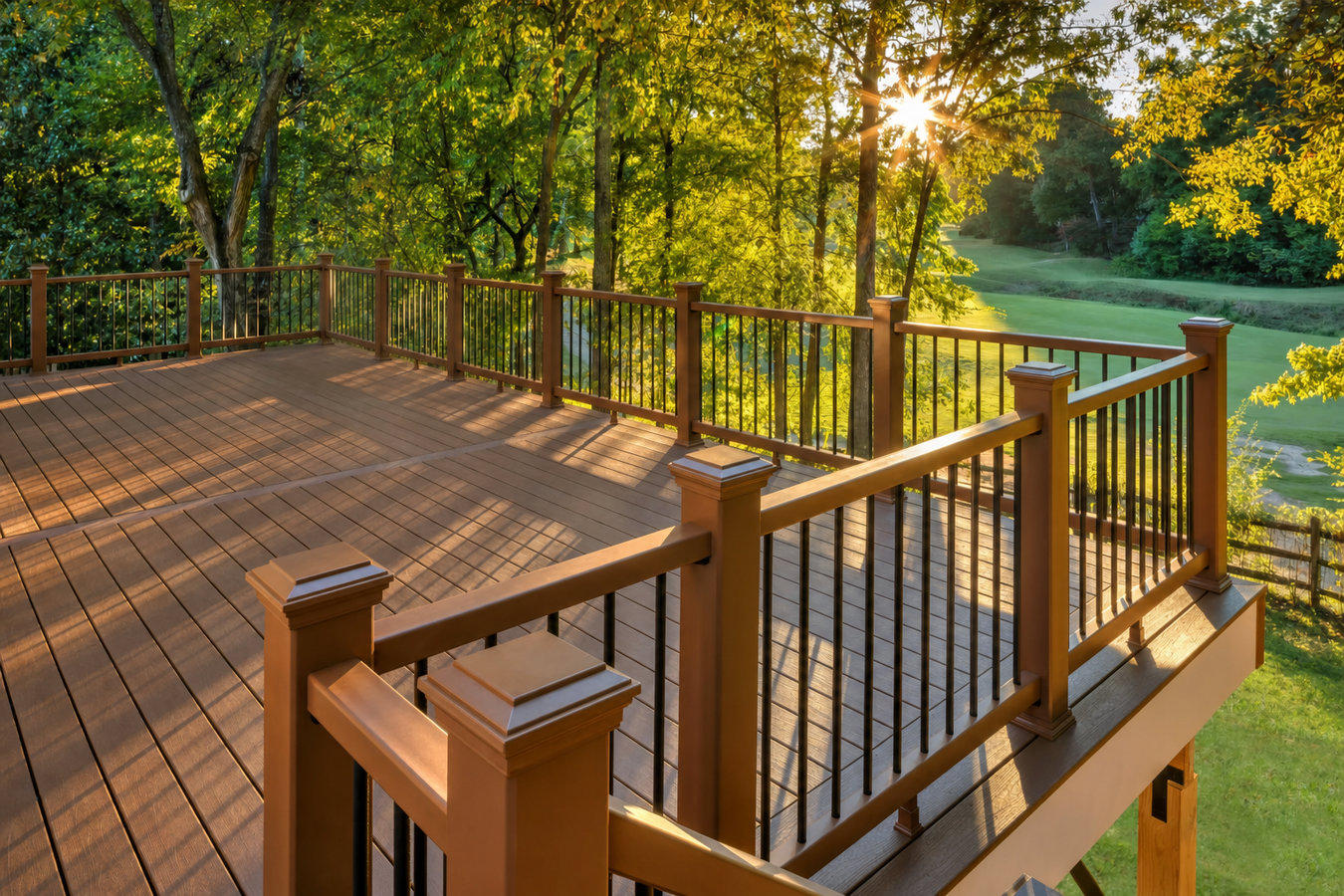
A railing that wobbles or rusts within a few years isn't protecting anyone. We install railing systems built for Eureka's coastal climate - compliant with California code, anchored for seismic safety, and done with a permit.
Deck railing installation in Eureka, CA covers removing the existing railing system, assessing the deck frame underneath, and installing new posts, rails, and balusters to California's current safety requirements - most standard projects are completed in one to two days of active work, with the full timeline running three to five weeks once permits are factored in.
In California, any deck platform 30 inches or more above the ground is required to have a railing - and that railing must meet specific height and spacing requirements. Eureka has a large stock of Victorian-era and early 20th-century homes where the original decorative railings were never designed to meet today's safety standards. If your home was built before the 1970s, there's a real chance your existing railing is too short, too widely spaced, or structurally compromised by decades of coastal moisture. Homeowners who are upgrading an older structure often find it makes sense to evaluate the full deck condition first - something we also handle through our multi-level decks and deck build services.
The posts are the foundation of the whole railing system. If posts are undersized, spaced too far apart, or bolted onto a compromised deck frame, the entire railing can fail under pressure even if it looks fine from a distance. We assess the deck frame during the site visit and tell you honestly if repairs are needed before installation begins.
Stand at the top of your deck stairs or along the edge and push firmly on the top rail. If it moves, sways, or feels loose at the base, the posts or connections have weakened. This is the most important warning sign - a railing that looks fine but moves under pressure can fail suddenly when someone leans on it hard.
In Eureka's wet climate, wood railings absorb moisture year after year. When the surface turns gray and the wood feels soft or spongy underfoot, rot has likely set in below the surface. Splintering balusters are also a sign the wood has dried out and cracked - both are safety hazards, especially if children use the deck regularly.
Stand next to your railing and notice where the top rail hits your body. If it falls below your hip, it's probably shorter than current safety requirements. Older Eureka homes - especially Victorians - were often built with decorative railings not designed to stop a fall. If yours looks more ornamental than protective, have a contractor measure it.
Walk along your railing and look at the gaps between the vertical pieces. If the space is wide enough to fit your fist through, it's wide enough for a small child's head - and that's a safety problem under California code. This is especially common on older homes where the original railing was decorative rather than code-compliant.
We handle deck railing installation as a standalone project or as part of a new deck build. That includes measuring the run, checking the deck frame, pulling the permit from the City of Eureka Building Division, installing posts with seismic-appropriate anchoring, and completing the installation in compliance with California's current height and baluster-spacing requirements. Every project ends with a city inspection and a final walkthrough. Homeowners building a new deck - particularly those planning a custom deck design and build - often incorporate railing selection into the initial design conversation so everything is coordinated from the start.
Material choice is one of the most important decisions in a railing project, and it matters more in Eureka than in most California cities. Salt air from Humboldt Bay accelerates corrosion in standard hardware, and fog keeps wood surfaces damp for long stretches. We walk through the trade-offs of each material option and make a recommendation based on your deck, your budget, and how much maintenance you want to do in the coming years.
Suits homeowners who want a low-maintenance railing that won't rust or rot in Eureka's coastal conditions - aluminum holds up well in salt air with minimal upkeep.
Suits homeowners who prefer a traditional look and are willing to maintain it - best paired with proper sealant and coastal-rated hardware to extend life in this climate.
Suits homeowners who want the appearance of wood without the maintenance - composite won't splinter, absorb moisture, or require annual sealing.
Suits homeowners who want to preserve sightlines to the yard or water view while still meeting safety requirements - popular on elevated decks with desirable views.
Eureka's Victorian-era housing stock is one of the most intact on the West Coast, and many of those homes still have their original decorative railings - or patchwork replacements added over the decades without permits or code compliance checks. A railing that was built for looks in 1905 was never designed to hold the weight of an adult who loses their footing. We work on older homes throughout the city, and we always assess the deck frame underneath before we quote a railing installation. Homeowners in Fortuna, CA and McKinleyville, CA face the same combination of aging housing stock and coastal conditions, and we bring the same standards to every project across Humboldt County.
Humboldt County is also one of the most seismically active regions in the United States. Standard railing anchoring is designed for vertical loads - the everyday stress of people leaning on it. Seismic forces are lateral, and a railing not anchored to handle ground movement can fail during an earthquake even if it feels solid on a calm day. We use hardware and post-attachment methods specifically chosen for lateral resistance, which is the same approach the City of Eureka Building Division inspects for on permitted projects. For background on seismic risk in this region, the U.S. Geological Survey and the North American Deck and Railing Association both publish resources on deck structural requirements.
We ask a few basic questions about your railing run, current material, and what you've noticed. Then we come out to measure, check the deck frame beneath, and assess what's underneath the existing railing. This visit typically takes 30 to 60 minutes. We reply within 1 business day of your initial inquiry.
After the site visit, you receive a written estimate that separates materials and labor - not a single number you can't evaluate. We walk through material options at this stage so you understand what you're choosing and why each one works differently in Eureka's climate.
For most structural railing work, we apply for a building permit through the City Building Division before any work starts. This typically takes one to three weeks. We handle all the paperwork - you don't need to do anything except plan your timeline with this step included.
We remove the old railing, install posts, rails, and balusters, and schedule the city inspection. The inspector checks height, baluster spacing, and post attachment. Once it passes, we do a final walkthrough - you push on the posts, check the spacing, and ask about maintenance before we leave.
Free estimate - no obligation. We reply within 1 business day.
(707) 572-3816A large share of our railing projects are on Victorian-era and early 20th-century homes throughout Eureka. We know how to assess the original deck framing, identify what needs to be reinforced before installation, and work around the structural quirks common in homes built long before today's deck standards existed. That experience with local building history isn't something you pick up doing projects in newer subdivisions.
We use stainless steel or specially coated fasteners and connectors on every railing project - not because it's an add-on, but because standard steel corrodes within a few years in Eureka's salt air. The hardware holding the posts to the deck frame is the most critical part of the system. We treat it that way on every job, whether the railing is wood, aluminum, or cable.
We file every required permit and schedule the city inspection ourselves. Once the railing passes, that sign-off becomes part of your home's permit record - which matters if you rent to guests, make an insurance claim, or sell your home. You can also verify any contractor's California license at the California Contractors State License Board website before you hire anyone.
Humboldt County sits in one of the most seismically active regions of the country. We anchor posts and connections with hardware rated for lateral loads - the forces that matter during an earthquake - not just the everyday vertical pressure of someone leaning on the rail. The City of Eureka inspects for this on permitted projects, which is one more reason pulling the permit is always worth it.
These aren't generic promises - they're the specific details that separate a railing that holds up in Eureka's climate and survives a city inspection from one that looks fine at installation and starts to fail at the connections within a few years.
If you're starting from scratch or replacing an aging deck entirely, railing selection is part of the design conversation - we handle the full project from permit to final walkthrough.
Learn MoreMulti-level decks require compliant railings on every elevated platform - we install the full railing system as part of the build or as a follow-on project.
Learn MorePermit-ready crews available now - don't wait until the spring rush fills the calendar. Get a free written estimate before anyone picks up a tool.